La Fábrica: How Real Madrid’s Youth Factory Works
Meet the football factory behind generations of stars.
From schoolboy prospects to Bernabéu hopefuls, this is how Real Madrid builds players capable of surviving at football’s highest level.
Inside Real Madrid’s Youth Development Machine
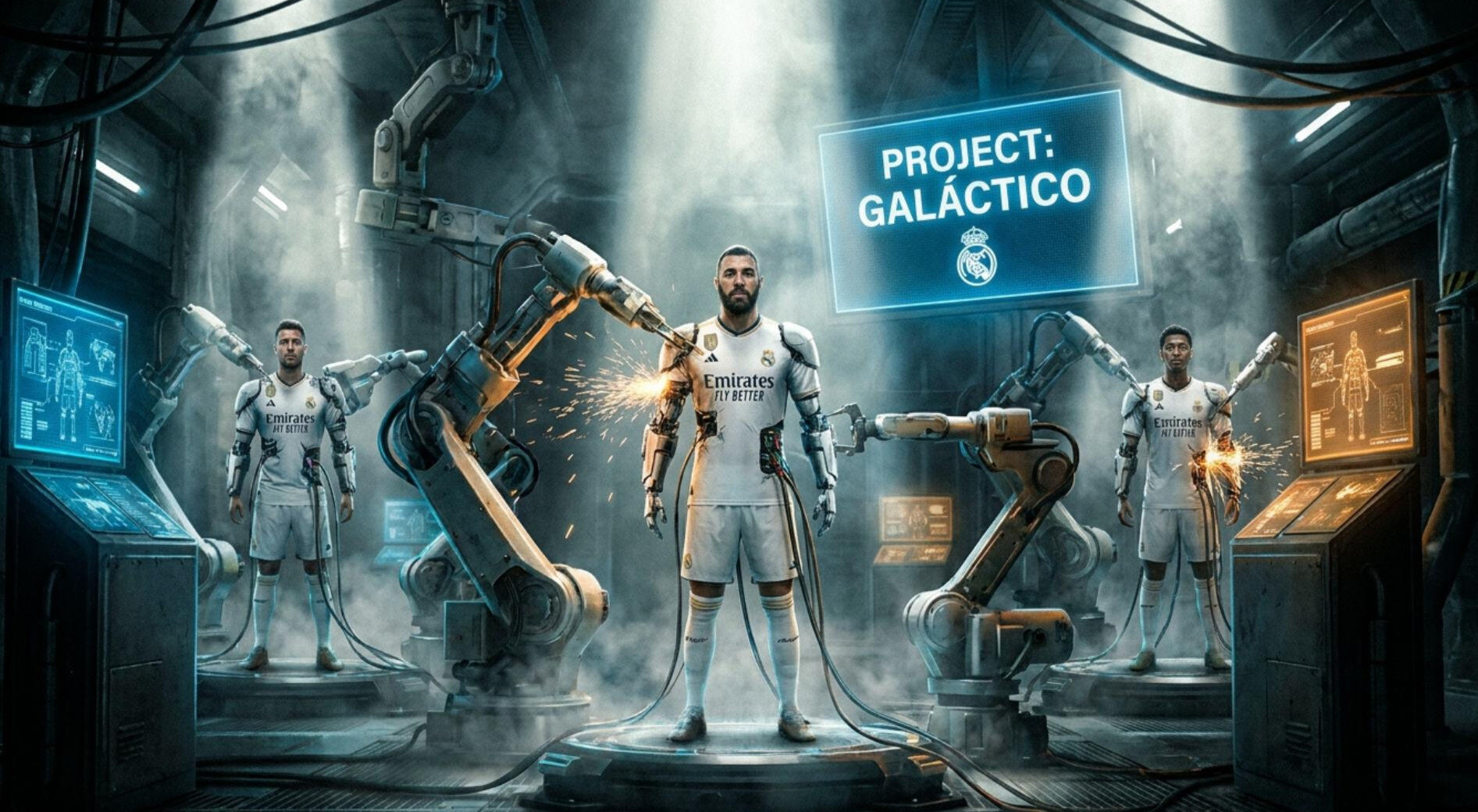
Barcelona's La Masia may be the most famous football academy in Spain, but across Madrid another youth system has been producing professional footballers on a remarkable scale for decades.It is known as La Fábrica, Spanish for "The Factory", and the name is fitting.Real Madrid's academy has produced European Cup winners, World Cup winners, club captains and international stars. It has also produced hundreds of professional players who never became regulars at the Santiago Bernabéu.That second group is important.To understand La Fábrica properly, you have to stop judging it simply by counting how many academy graduates currently play for Real Madrid's first team.Real Madrid operates at an unusual level. A young player trying to break into the senior side may be competing for a place with footballers bought for tens of millions of euros and already regarded as among the best in the world.Most academy players will not win that battle.Yet many still leave Madrid ready to play professional football elsewhere.That is one of the great strengths of La Fábrica.In January 2026, the CIES Football Observatory counted 35 players trained by Real Madrid playing across Europe's five biggest leagues. Only Barcelona had more.Rather than being simply a production line for Real Madrid's senior team, La Fábrica has become one of world football's great producers of professional players.And occasionally, it produces someone capable of becoming a Real Madrid legend.
What Is La Fábrica?
La Fábrica is the name commonly given to Real Madrid's youth development system.It covers the many boys' teams that sit below the senior side, from children taking their first steps in organised football through to Real Madrid Castilla, the reserve team that acts as the final major bridge between youth and senior football.At the time of writing, Real Madrid's men's academy structure includes Castilla, Real Madrid C, three Juvenil teams, two Cadete teams, two Infantil teams, three Alevín teams, two Benjamín teams, two Prebenjamín teams and a Debutante side.Players therefore move through a long series of age groups.For most, there is no sudden jump from promising schoolboy to the Bernabéu.Development happens year after year.Every promotion within the academy brings stronger teammates, harder matches and greater expectations.And expectations at Real Madrid start early.Iker Casillas, who entered the club at the age of nine, has spoken about how academy players are taught education, respect, commitment and sacrifice from a young age. He has also explained that even at youth level there is pressure to be the best.That helps explain an important part of La Fábrica.Real Madrid is not simply teaching children how to play football.It is preparing young players for the demands that come with representing one of the world's biggest clubs.
The Roots of Real Madrid's Academy
Real Madrid's youth structure did not suddenly appear with modern training grounds, sports science and huge scouting departments.Its roots go back much further.In 1942, Madrid club AD Plus Ultra agreed to become a feeder side for Real Madrid. It would eventually develop into the reserve-team structure associated with Castilla.The organised youth system grew strongly during the 1950s under Miguel Malbo, a hugely important but less famous figure in Real Madrid history.Malbo spent decades working with the club's youth players and became closely associated with the growth of the cantera, the Spanish term used for a club's youth system.Real Madrid itself has referred to him as the father of its youth teams. One early example of his eye for talent was Ramón Marsal, who was spotted by Malbo before eventually becoming part of Madrid's European Cup-winning first team.The basic idea established during those years still makes sense today.Real Madrid could sign great footballers from elsewhere while also creating its own.The two approaches were never required to be opposites.That became particularly important because Real Madrid's standards kept rising.Producing a good professional footballer was one thing.Producing a footballer good enough to replace one of the best players in the world was something else entirely.La Fábrica had to become capable of doing both.
Valdebebas: The Modern Home of La Fábrica
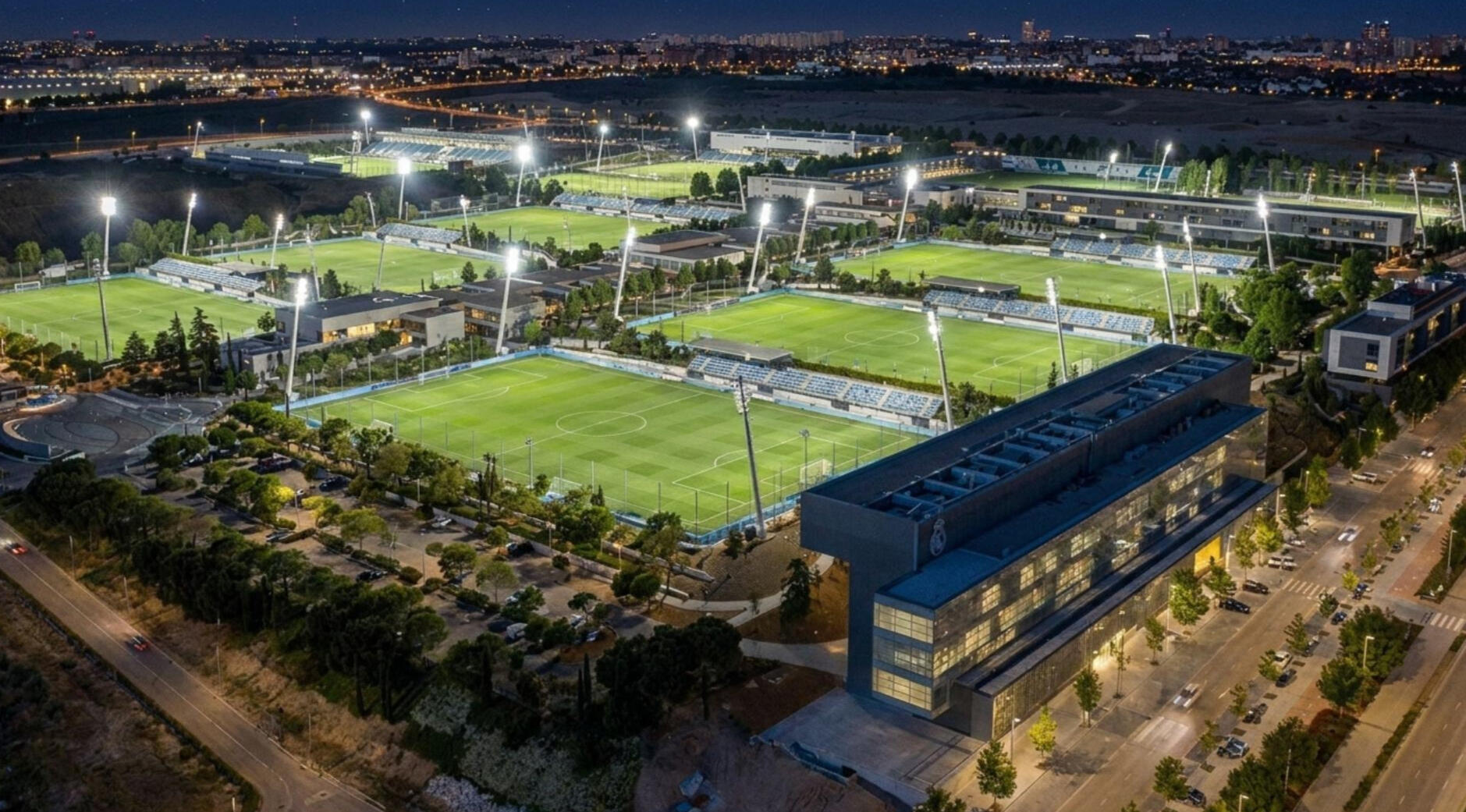
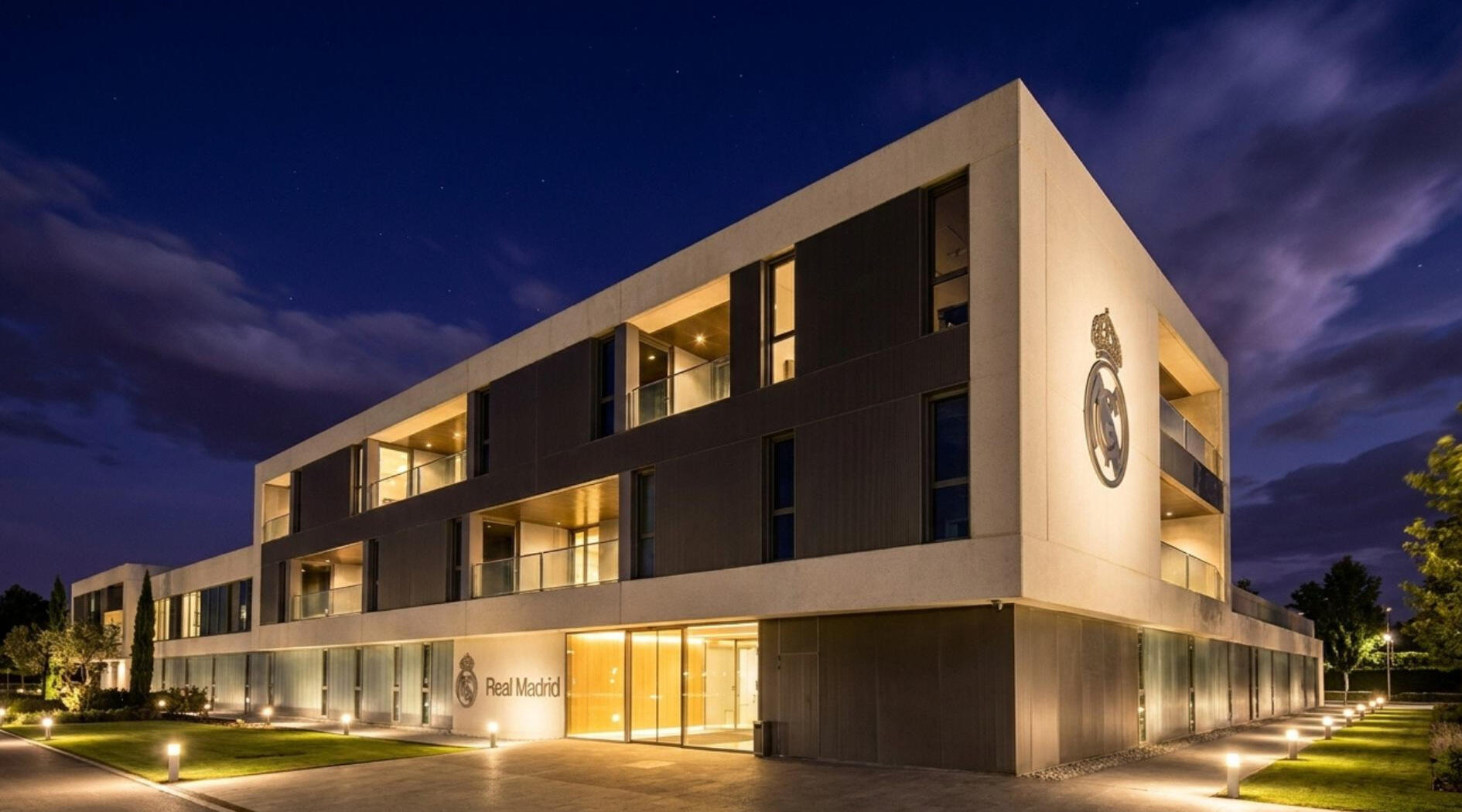
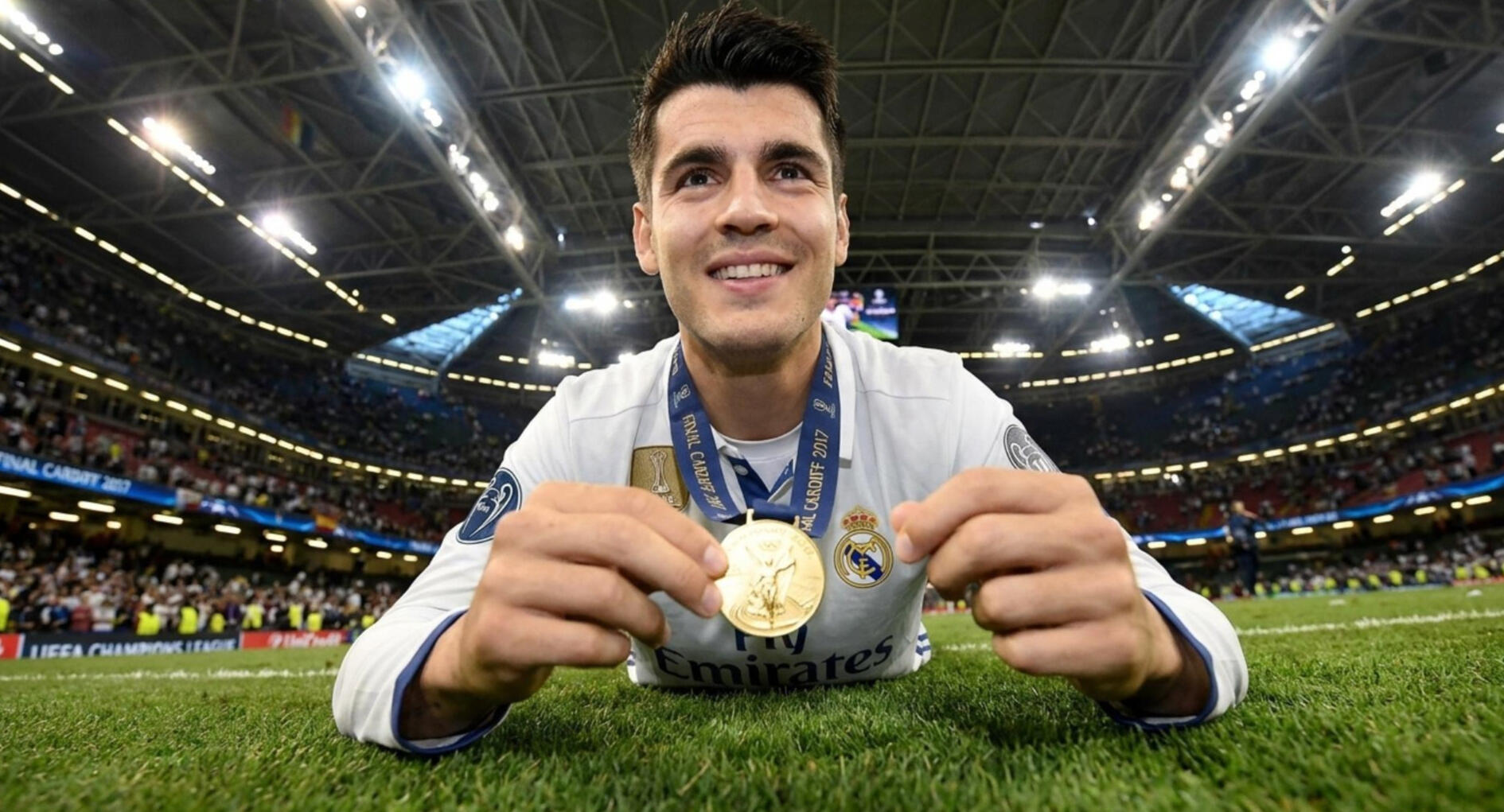
Today, the centre of the system is Real Madrid City at Valdebebas.The huge training complex was officially opened on 30 September 2005 and covers around 1.2 million square metres. It includes multiple football pitches, medical areas, gyms, classrooms and training spaces used across the club.For young players, however, one of its most important features is the academy residence.Real Madrid says the football and basketball academy residence houses more than 80 youth players. It contains 40 double rooms as well as classroom space.That detail tells us something important about recruitment.La Fábrica is not limited to children who happen to live close enough to Madrid to attend training after school.Players can arrive from other parts of Spain and live within the club's system.Raúl Asencio and Álvaro Carreras provide a modern example.Both joined Real Madrid's academy at 14. Asencio arrived from the Canary Islands and Carreras from Galicia. They lived in the residence, went to school together and played through several youth levels before their careers later brought them into Real Madrid's senior squad.That is a very different life from turning up for football training twice a week.For some youngsters, Real Madrid becomes their school environment, football environment and home at the same time.The club is therefore developing far more than what happens during a 90-minute match.How the La Fábrica Ladder WorksThe academy can be thought of as a pyramid.There are many young players near the bottom.The numbers become smaller as the level rises.Competition for places grows harder.By the time a player reaches the Juvenil age groups, football is becoming very serious indeed.Juvenil A is the leading under-19 side and competes against some of the best young players in Spain and Europe.Above that sit Real Madrid C and Castilla, where the separation between youth football and adult professional football becomes much smaller.Castilla is particularly important.It is not simply another under-21 team playing against other development squads.It competes within Spain's senior league structure.Young Madrid players can therefore find themselves facing experienced professionals whose careers and livelihoods depend on winning.That is a major step.A technically gifted teenager may have dominated opponents at youth level. Senior football asks different questions.- Can he cope with stronger opponents?- Can he make decisions while being pressed?- Can he handle a bad pitch or a difficult away match?- Can he remain calm when his team is losing?- Can he perform when the opposition is more experienced?That is why Castilla has long been such an important part of Real Madrid's system.When Castilla Reached a Copa del Rey FinalPerhaps nothing shows the historic strength of Real Madrid's reserve structure better than what happened in 1980.Castilla reached the Copa del Rey final.A reserve team had fought its way through Spain's main knockout competition and reached the final, where the opponent happened to be Real Madrid's own first team.Madrid won 6-1, but Castilla's appearance in the final remains one of the most unusual achievements in Spanish football history.The significance went beyond one cup run.It showed that Real Madrid's young and reserve players could compete with established senior sides.A few years later, another group would prove just how valuable the academy could be to the senior team.La Quinta del BuitreThe 1980s brought perhaps La Fábrica's most famous generation.Emilio Butragueño, Manolo Sanchís, Míchel, Rafael Martín Vázquez and Miguel Pardeza became known collectively as La Quinta del Buitre, named after Butragueño's nickname, El Buitre.They had developed through the club's system before making their mark at senior level.Alfredo Di Stéfano played an important part in giving several members of the group their first-team chances, while Amancio also played a key role in their development with Castilla.The group became central to one of Real Madrid's strongest domestic periods.For La Fábrica, their success created a lasting example of what was possible.An academy was not merely there to supply squad players.A great generation could help form the heart of Real Madrid's first team.But such generations are rare.That is why judging every later academy group against La Quinta del Buitre gives a false idea of how youth development works.- Sometimes an academy produces five players who arrive close together.- Sometimes it produces one exceptional player.- Sometimes its best graduates build their careers elsewhere.All three outcomes can still represent successful development.Raúl: The Fast TrackFew players show the other extreme better than Raúl González.Raúl had previously been with Atlético Madrid before joining Real Madrid's youth teams for the 1992/93 season.He did not spend a decade slowly moving through every age group.His rise was extremely fast.Real Madrid records that he scored 13 goals in seven youth-team matches before Jorge Valdano gave him his senior debut during the following season.Raúl was only 17.He went on to make 741 competitive appearances for Real Madrid, scoring 323 goals and becoming one of the defining players in the club's modern history.His case shows another strength of a good academy.A system needs structure, but it must also recognise when a player is moving faster than the structure.The best prospects cannot always be developed according to a fixed timetable.Sometimes the correct decision is simply to move them up.Iker Casillas: From Nine-Year-Old to CaptainIf Raúl represents rapid progress, Iker Casillas represents the long-term academy player.Casillas joined Real Madrid when he was nine.He eventually made his first-team debut in September 1999 at the age of 18 and went on to play 725 official matches for the club.He became captain, won major trophies with Madrid and then captained Spain during the country's greatest international period.Casillas is one of the clearest examples of what every young goalkeeper entering La Fábrica can dream of achieving.But his story also shows just how high the target is.An academy does not produce an Iker Casillas every few seasons.Nobody does.The purpose of the system is to create the conditions in which an exceptional youngster has a chance to become an exceptional professional.What happens after that depends on ability, opportunity, timing, competition and many other factors that no academy can completely control.There Is No Easy Route Into Real Madrid's First TeamThis is where La Fábrica differs from many academies.The final step can be harder than everything that comes before it.A young striker may score heavily for Castilla and still look at the senior squad to find an established international striker ahead of him.A midfielder may be one of the best young players in Spain and still be competing with players bought from leading clubs around the world.Real Madrid's transfer policy creates an unusually high entry standard.That means the academy has developed another way of working.Sometimes leaving Real Madrid is part of a player's development rather than the end of his relationship with the club.Leave, Play, Improve, ReturnReal Madrid has repeatedly allowed young players to gain experience elsewhere.- Some leave on loan.- Some are sold.- Some later return.Álvaro Arbeloa developed with Madrid's reserve side before leaving, first establishing himself elsewhere in Spain and then playing for Liverpool. His performances eventually led to a return to Real Madrid, where he became a regular and won major trophies.Álvaro Morata also left Madrid for Juventus before returning after proving himself at a major European club. In 2016, Florentino Pérez openly described loaning young players elsewhere as part of a sporting plan intended to help them mature with the possibility of later returning.Fran García offers a more recent example.He joined Real Madrid's youth system in 2013, progressed to Castilla and then moved to Rayo Vallecano. Three seasons of regular football followed before Real Madrid brought him back in 2023.This is one of the most important parts of La Fábrica to understand.A player leaving does not automatically mean the academy failed.Sometimes Real Madrid has taught the player almost everything it can teach him at youth level.What he needs next is 30 or 40 senior matches.If those minutes are not available at the Bernabéu, another club may be the best place to get them.
Why La Fábrica Produces So Many Professionals
The number of Real Madrid-trained players found throughout professional football is not an accident.Young players spend years competing against high-quality teammates for their places.Training standards are high.Selection standards are high.Matches matter.Players are expected to deal with pressure.They also grow up knowing that being one of the best players in an age group does not guarantee promotion to the next one.That environment can be unforgiving, but it also prepares players for professional football.A youngster who eventually leaves Real Madrid may arrive at his next club with years of elite coaching behind him.- He has trained alongside highly rated players.- He has played in demanding competitions.- He has experienced competition for his place.- He understands the expectations inside a major football club.The result is that La Fábrica's influence can be seen far beyond Madrid itself.A CIES study published in January 2026 found 35 Real Madrid-trained players active across Europe's five biggest domestic leagues.That statistic may actually say more about the academy than the number of graduates sitting on Real Madrid's first-team bench.
La Fábrica Is Not La Masia
Comparisons with Barcelona are unavoidable.But the academies should not be expected to work in exactly the same way.La Masia became strongly linked with a very clear football identity, especially during the years when players such as Xavi, Andrés Iniesta, Sergio Busquets and Lionel Messi formed the heart of Barcelona's first team.Real Madrid's academy has generally been less closely tied to one fixed senior playing style.That can be an advantage.Real Madrid changes coaches regularly. Different managers may prefer different formations, pressing systems or types of possession football.The academy therefore needs to produce footballers capable of adapting.A graduate may eventually play for Real Madrid.He may play for another Spanish side.He may move to England, Germany, Italy or France.His education needs to travel with him.This helps explain why measuring La Fábrica only by senior appearances for Real Madrid misses much of its value.Barcelona's academy has often been celebrated for supplying Barcelona.Real Madrid's has also become highly successful at supplying professional football as a whole.The Standard Is Almost UnfairImagine being an outstanding 20-year-old right-back.At most clubs, being among the best young right-backs in Spain might be enough to earn serious senior minutes.At Real Madrid, you might find an established international in your position.And if that player leaves, Real Madrid can enter the transfer market for another world-class replacement.That is the reality La Fábrica graduates face.The academy can prepare them.It cannot remove the competition.This is why players such as Dani Carvajal have become so important to the story of the system.Carvajal came through Madrid's youth ranks, left for Bayer Leverkusen to play senior football and then returned.He became a major first-team player and scored in Real Madrid's 2024 Champions League final victory over Borussia Dortmund.His career contains almost the entire La Fábrica model in one story.Train the player.Prepare him for senior football.Allow him to gain experience.Bring him back when he is ready.Then see whether he can meet Real Madrid's extraordinary standard.
The Academy Also Has Financial Value
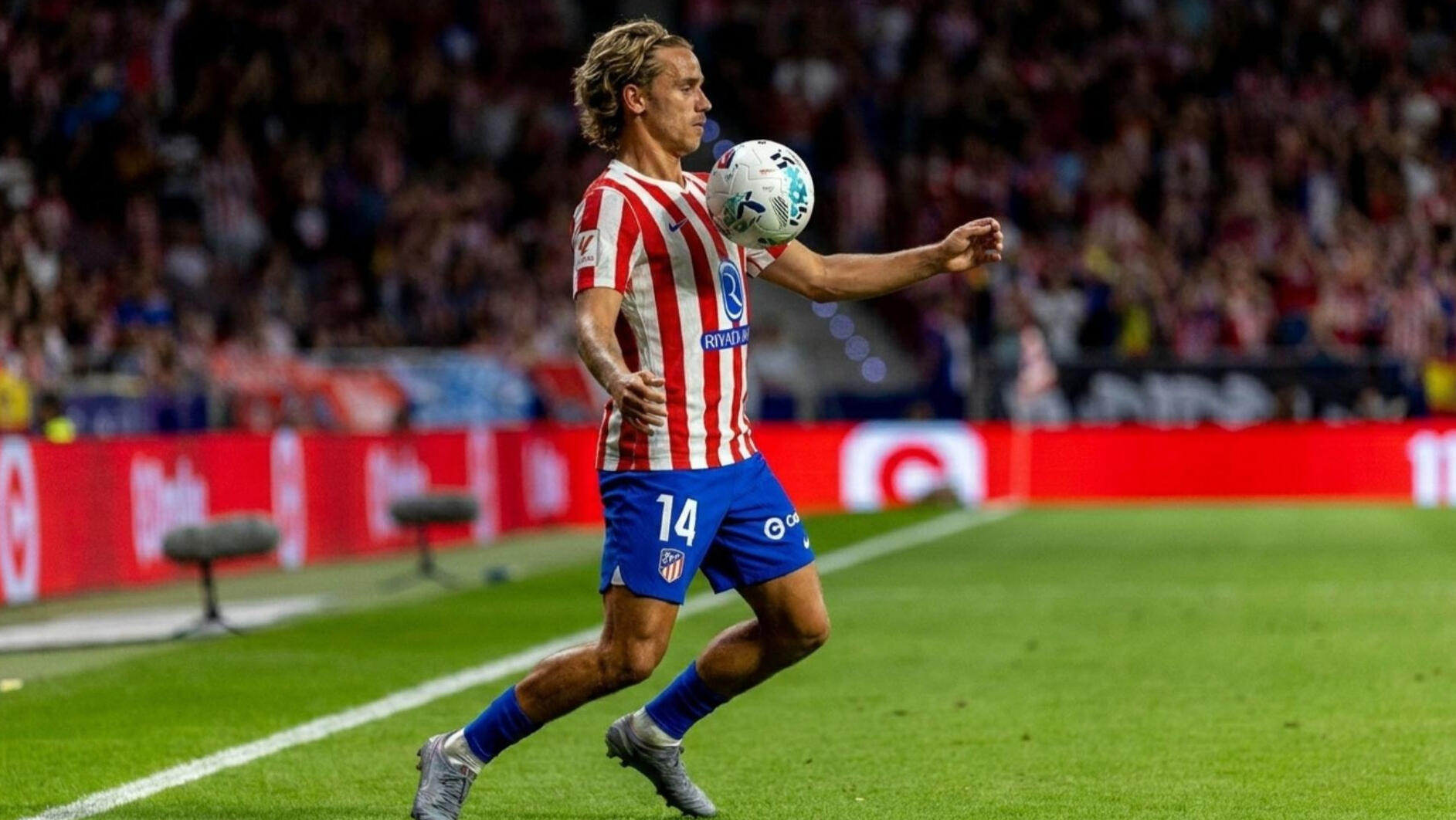
There is another side to the system that should not be ignored.Academy players are valuable assets.When Real Madrid develops a young player who later moves permanently to another club, years of coaching can eventually produce transfer income.Multiply that across many players and the academy becomes financially important as well as sporting.This does not mean young footballers are developed simply to be sold.The first-team dream remains real.But only a small percentage can stay.Selling players who are good enough for professional football but not currently able to command a place at Madrid makes economic sense.It can also make sporting sense for the player.Sitting behind established stars is rarely better for development than playing every weekend somewhere else.The key is that Real Madrid has enough depth in its academy to repeat the process continually.
A Modern Generation Is Still Coming Through
La Fábrica is sometimes spoken about as though its great years belong to the past.Recent results suggest otherwise.Real Madrid's Juvenil A won the 2025/26 UEFA Youth League, beating Club Brugge on penalties in the final in Lausanne on 20 April 2026.It was Madrid's second Youth League title, following its previous success in 2020.The same Juvenil A side then defeated Barcelona 4-1 in the Champions Cup final in May 2026.That completed a remarkable season in which the team won its domestic league, the UEFA Youth League and the Champions Cup. Real Madrid said it was the first Spanish side to win those three competitions in the same season.At senior level, recent academy players have also shown that the door is not closed.Raúl Asencio moved into first-team football during the 2024/25 season and featured in major Champions League matches. Gonzalo García also made an impact with the senior side in the 2025 Club World Cup, scoring four goals before the semi-final stage of the competition.No one can know how every highly rated teenager will develop.That uncertainty is part of youth football.But the production line is clearly still moving.What Does Success Actually Mean for La Fábrica?This is the question that changes how the academy should be judged.If success means producing eleven players good enough to start together for Real Madrid, almost every generation will fail.That is an impossible standard.If success means producing players capable of professional football at a high level, the assessment becomes very different.Some will become Real Madrid regulars.Some will become squad players.Some will leave and return later.Some will be sold.Some will build fine LaLiga careers.Others will play across Europe's leading leagues.A very small number may become figures such as Raúl or Casillas.All of those routes start in the same system.That is why La Fábrica matters.Its greatest achievement is not simply the names on the back of Real Madrid shirts.It is the enormous number of football careers that begin there.More Than a FactoryThe nickname "La Fábrica" suggests something mechanical.Players enter at one end and professionals come out at the other.Real life is far less simple.Young footballers develop at different speeds. Some suffer injuries. Some grow physically later than others. Some struggle with the move from youth football to adult football. Others suddenly improve when given regular senior matches.There is no production line that can guarantee a future star.What Real Madrid can provide is opportunity, coaching, competition, facilities and an environment in which talented young players are tested constantly.The rest belongs to the player.That is perhaps the best way to understand La Fábrica.It is not successful because every child becomes a Real Madrid star.It is successful because the standard is so high that even many of those who do not make the final step are still capable of becoming professional footballers elsewhere.And for the exceptional few who do reach the Bernabéu, there is a line connecting the modern academy back through Carvajal, Casillas and Raúl, through La Quinta del Buitre, and ultimately to the youth system built under Miguel Malbo many decades ago.Real Madrid will always sign stars.That is part of the club.But behind those famous transfers sits another system, one that works every day away from the attention surrounding the first team.Hundreds of young players train at Valdebebas hoping to become the next name to cross from the academy into senior football.Most will wear another club's shirt when they become professionals.A few will eventually wear Real Madrid's.And every so often, La Fábrica produces someone who wears it for years.
© All rights reserved.